


PEERS® For Preschoolers

2 Days A Week From 9:00am to 10:30am
What Is This Program About?
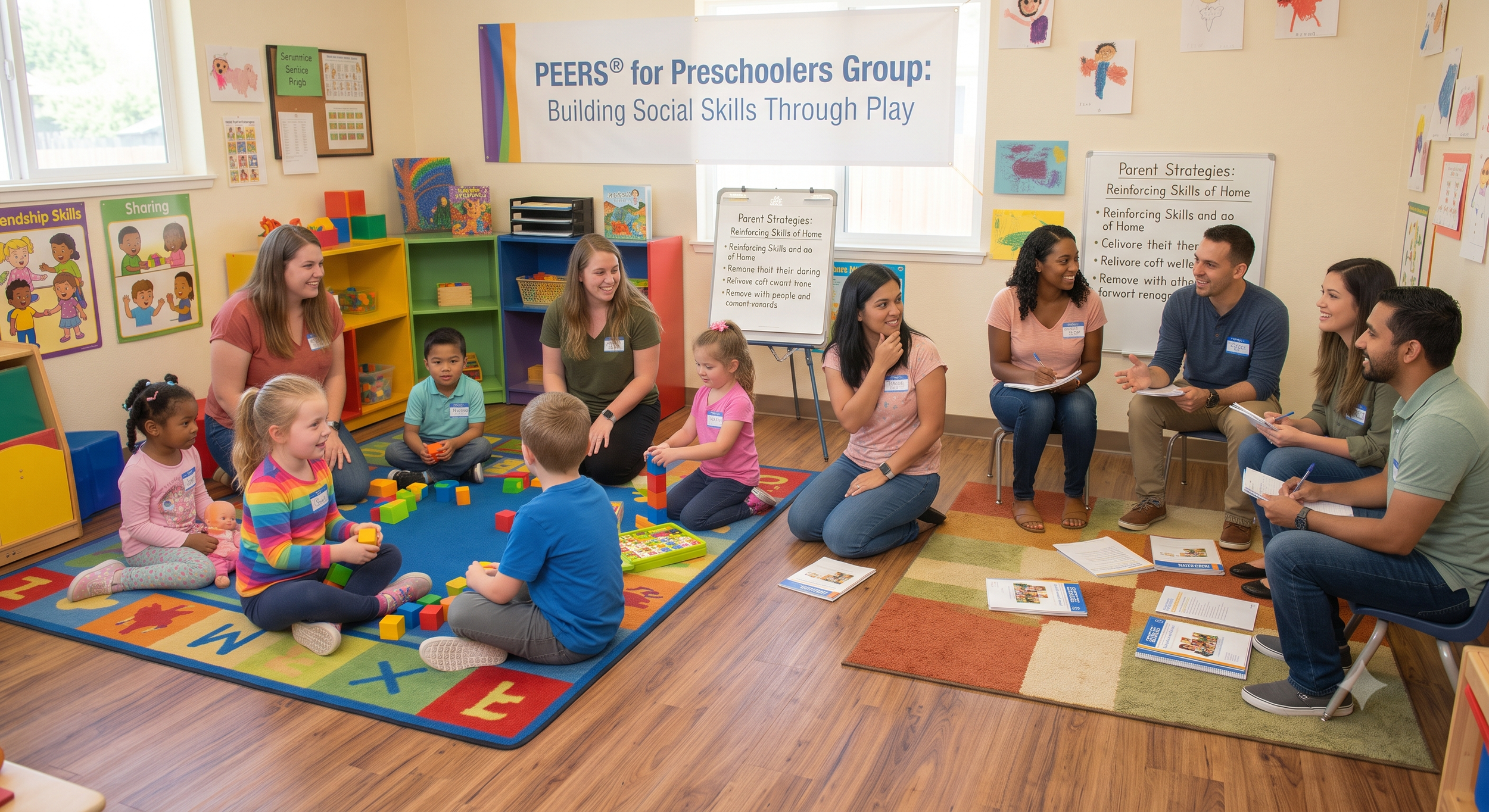
Our PEERS® for Preschoolers Group helps young learners develop the foundational social skills needed to build positive relationships with peers. Through structured activities, play-based learning, and caregiver support, learners practice important skills for engaging with others, joining play, communicating needs, and responding to social situations.
Using evidence-based strategies from the PEERS® for Preschoolers curriculum, children learn and practice social skills in a fun, supportive environment while caregivers are provided with strategies to help reinforce these skills at home and in everyday situations.
Who Is It For?
This group is designed for preschool-aged children, ages 3-6 who are beginning to develop social skills and would benefit from additional support with peer interactions. It is a good fit for learners who may have difficulty joining play, maintaining interactions, communicating with peers, sharing, taking turns, or responding flexibly during social situations. Children should use 3-5 word sentences to communicate.
Children are grouped with peers of similar ages and developmental goals to support meaningful learning opportunities and successful participation.
What Will Your Child Learn?
In our PEERS® for Preschoolers Group, children will build and practice early friendship and social communication skills through play, modelling, and guided practice, including:
Listening and Following Directions – Learning to attend to adults, follow group instructions, and participate in structured activities.
Meeting New Friends – Practicing how to greet others, introduce themselves, and join play with peers.
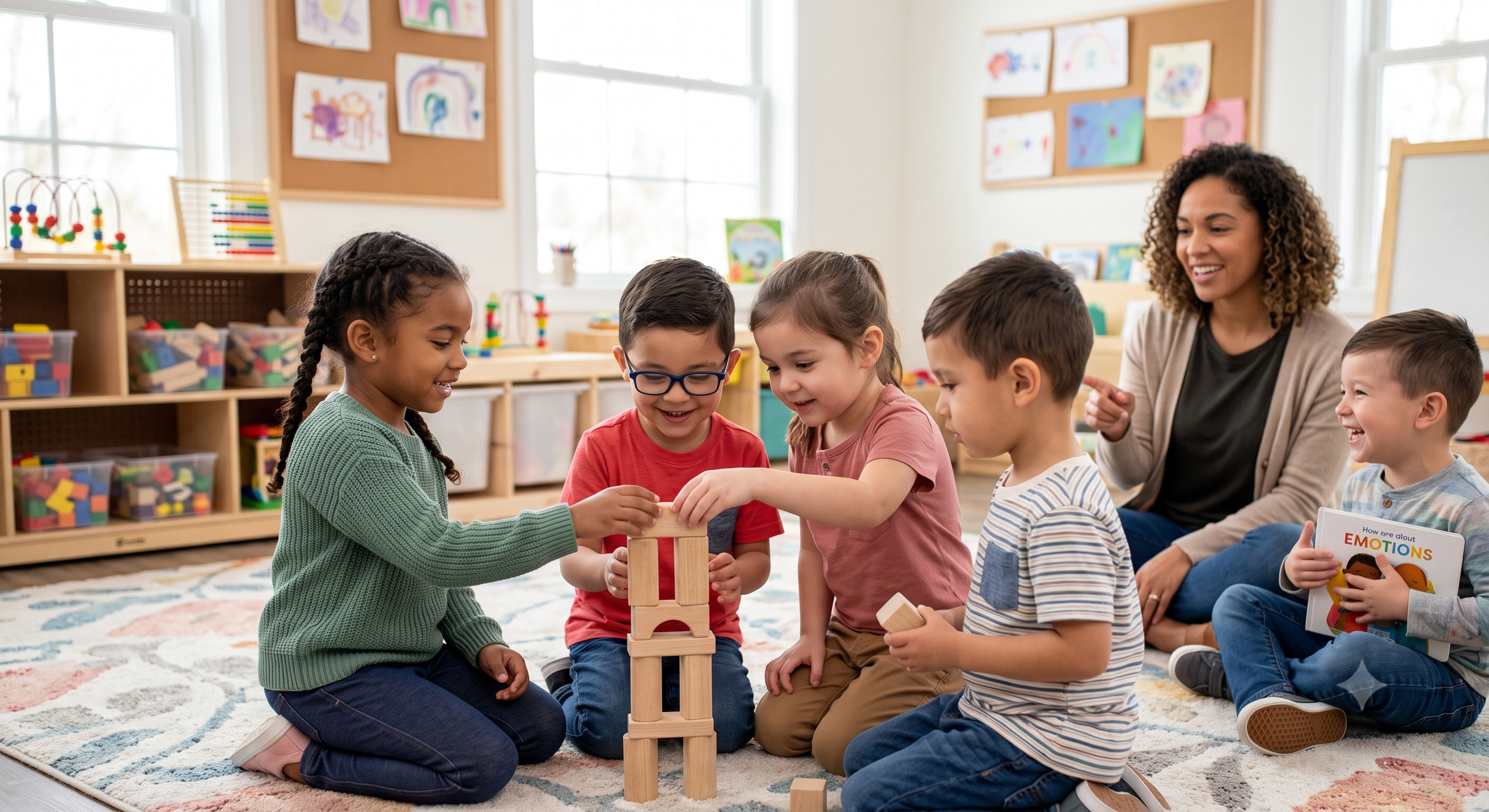
Sharing and Taking Turns – Building cooperative play skills by sharing materials, waiting, and participating in group games.
Play Skills – Learning how to choose activities, invite peers to play, join ongoing play, and keep play going together.
Communication Skills – Practicing asking for help, making requests, responding to others, and having simple back-and-forth conversations during play.
Problem-Solving with Peers – Developing strategies to handle challenges during play, ask for a turn, and work through simple disagreements appropriately.
Understanding Feelings – Learning to recognize emotions in themselves and others while developing strategies to respond appropriately.
Friendship Skills – Building the skills needed to develop positive peer relationships through kindness, cooperation, helping others, and encouraging peers.
Self-Regulation in Social Settings – Practicing skills such as using an appropriate voice, respecting personal space, waiting patiently, and managing emotions during group activities.
Please let us know if you have any further questions or if you would like to register