

Everyday Academics

1 Day Per Week From 9:00am-4:00pm
Semester Based Programs with ONGOING Registration
September to January * February to June * July to August
What Is The Program About?
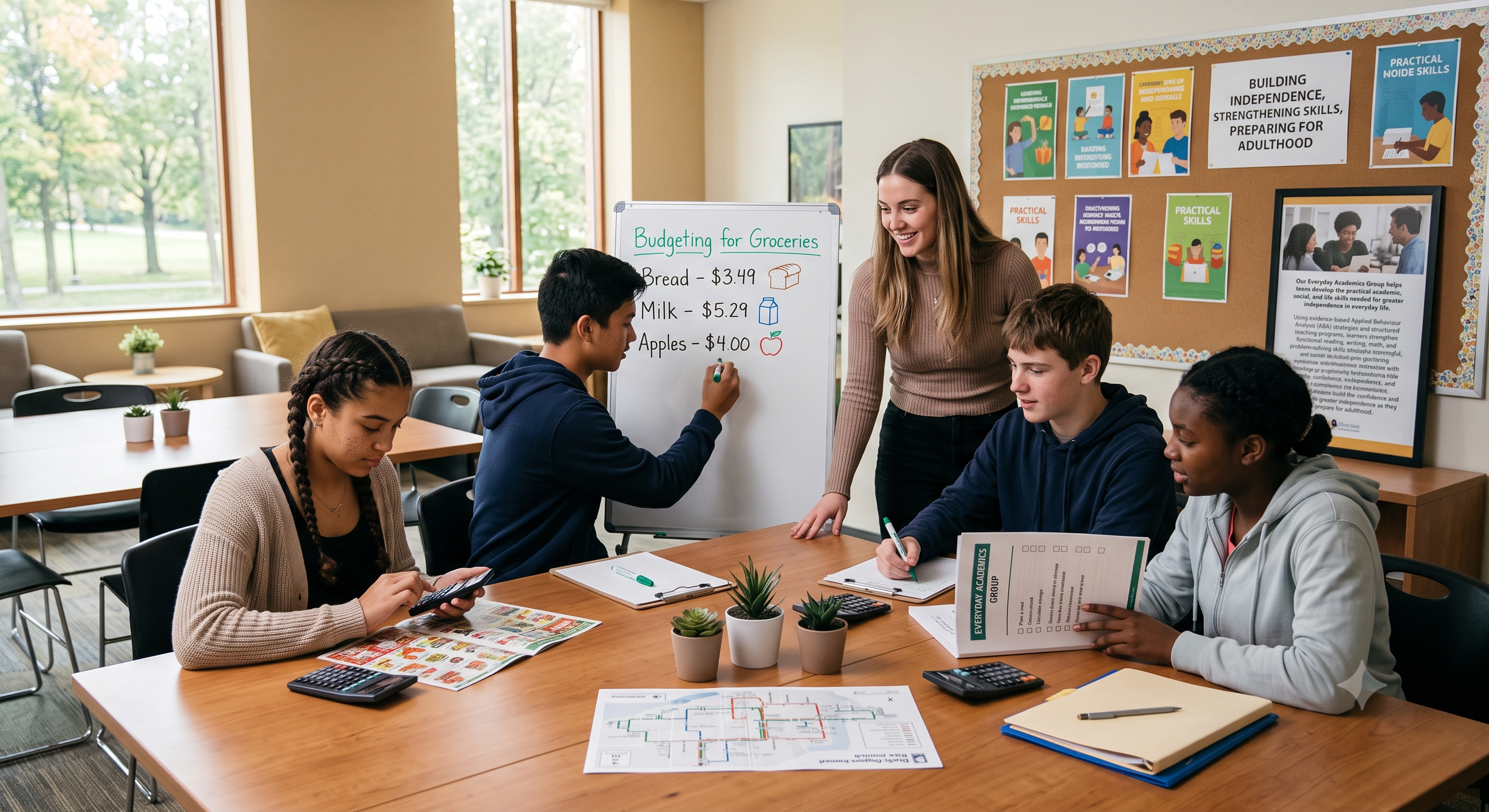
Our Everyday Academics Group helps learners develop the practical academic, social, and life skills needed for greater independence in everyday life. Using evidence-based Applied Behaviour Analysis (ABA) strategies and structured teaching programs, learners strengthen functional reading, writing, math, and problem-solving skills through meaningful, real-world activities.
The program combines individualized instruction with small-group learning to help learners apply academic skills to everyday situations while building confidence, independence, and social connections. By connecting academic learning to everyday situations, this program helps learners build the confidence and practical skills needed for greater independence as they prepare for adulthood.
Who Is It For?
This group is designed for teens ages 14–17 who benefit from continued academic instruction with an emphasis on functional, real-world learning. It is a good fit for learners who are developing practical academic skills while building greater independence, social communication, and daily living skills.
Learners participate in a structured small-group environment with individualized ABA instruction and support. Groups are designed for learners with similar developmental and learning goals, providing opportunities to practice new skills alongside peers while preparing for increased independence in adolescence and adulthood.
What Will Your Child Learn?
In our Everyday Academics Group, learners build practical academic, social, and independence skills through individualized instruction, structured teaching, and real-world learning experiences, including:
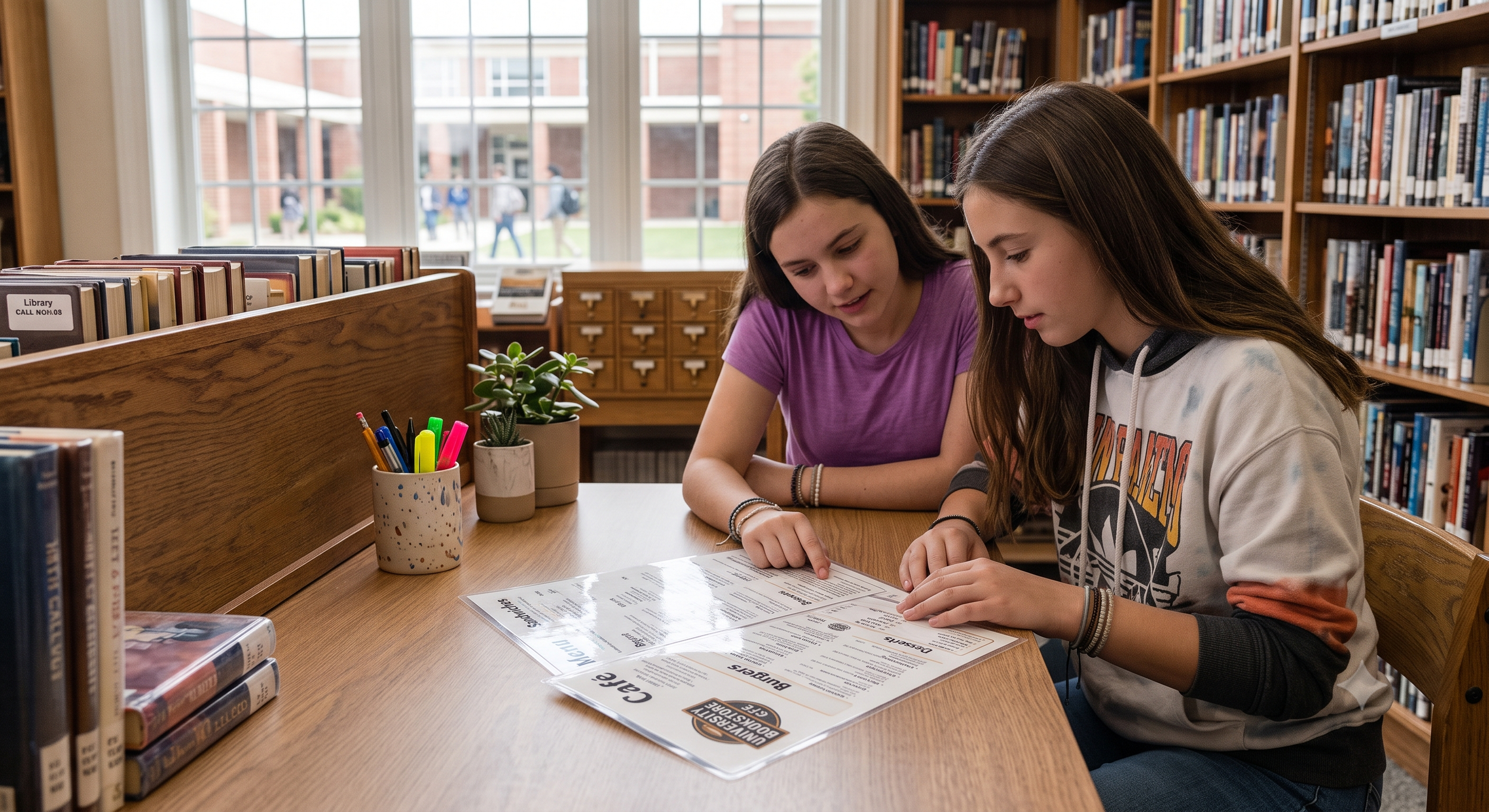
Functional Reading and Comprehension – Developing reading skills needed for everyday life, including schedules, forms, instructions, signs, recipes, menus, and workplace materials.
Functional Math and Money Skills – Building confidence with budgeting, counting money, making purchases, estimating costs, calculating discounts, and other practical math skills.
Writing and Communication – Practicing written communication through forms, emails, messages, and other everyday writing tasks.
Problem-Solving and Critical Thinking – Learning strategies to make decisions, solve everyday problems, and apply academic skills across different situations.
Social Communication Skills – Building conversation skills, perspective-taking, teamwork, and workplace-appropriate social interactions.
Health and Wellness – Developing knowledge related to personal health, healthy choices, self-care, and accessing health information.
Higher-Level Functional Living Skills – Practicing skills that support greater independence at home and in the community, such as planning, organization, time management, and daily responsibilities.
Self-Advocacy and Independence – Learning to communicate needs, make informed decisions, access supports, and prepare for future education, employment, and community participation.
Please let us know if you have any further questions or if you would like to register