

Classroom Readiness

Two ½ Days Per Week From 9:00am to 12:30pm
Semester Based Programs with ONGOING Registration
September to January * February to June * July to August
What Is The Program About?
Our Classroom Readiness Group provides a supportive, low-ratio learning environment designed to help young learners develop the skills needed to be successful in a classroom setting. Using evidence-based Applied Behaviour Analysis (ABA) strategies, learners receive individualized teaching and support while practicing classroom routines, academic skills, social interactions, and independence.
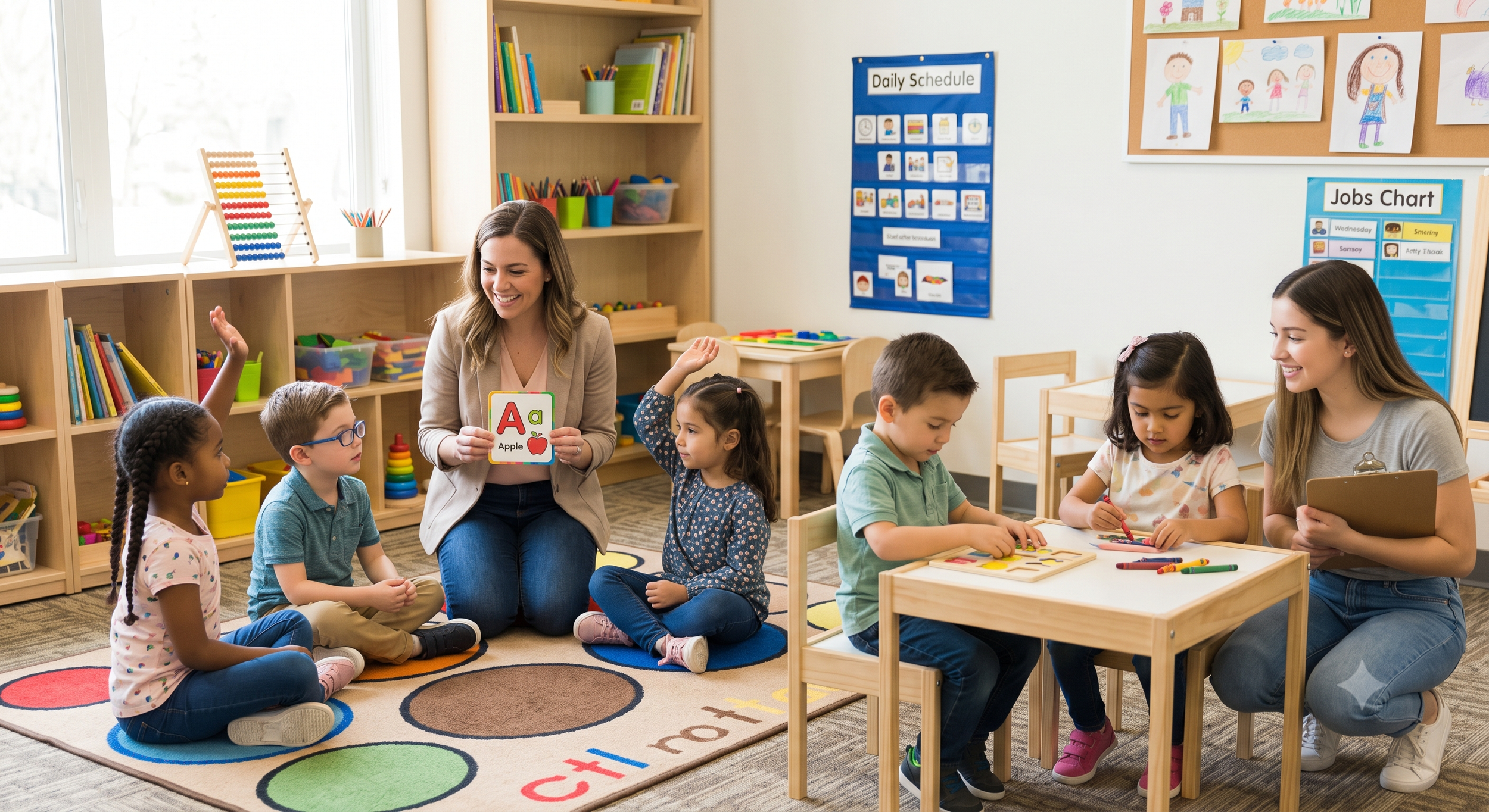
Through activities such as circle time, arts and crafts, group games, early academics, and daily classroom routines, learners practice important skills including following instructions, attending to group activities, completing tasks, communicating with others, and increasing independence. This program is designed for learners who would benefit from individualized instruction and additional opportunities to develop foundational academics, social, communication and participation skills in a small group setting.
Who Is It For?
This group is designed for children ages 6–9 who would benefit from a structured classroom-based learning environment with individualized ABA support. The program is a good fit for learners who are developing the skills needed to participate more independently in an early elementary classroom setting, including following routines, engaging in group learning, completing academic tasks, and interacting with peers.
Learners participate in a small-group setting that provides opportunities to practice classroom expectations, social skills, communication, and independence while receiving individualized teaching and support. Groups are designed for learners with similar developmental goals to encourage meaningful participation, peer learning, and successful group experiences.
What Will Your Child Learn?
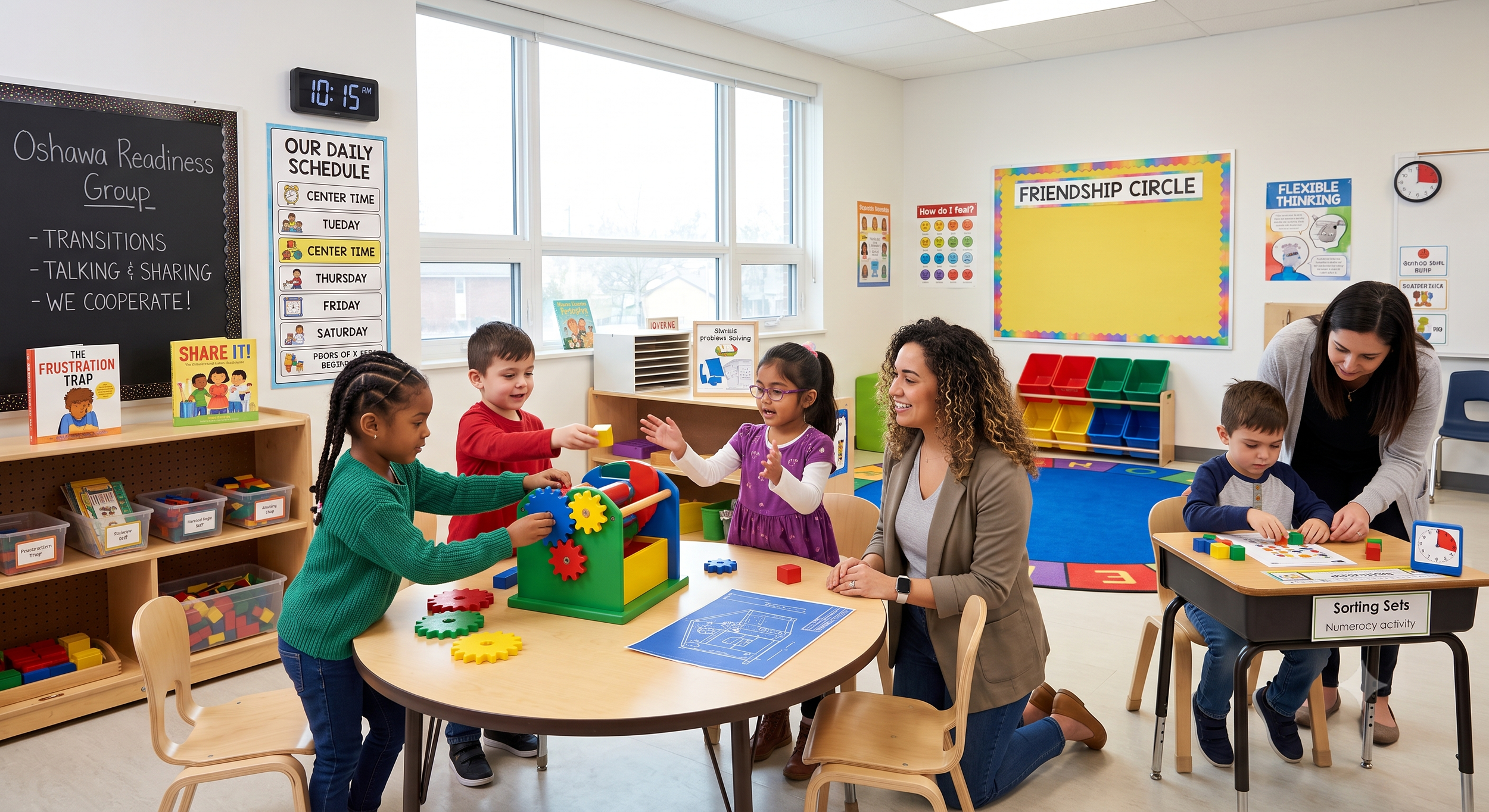
In our Classroom Readiness Group, learners build and practice the skills needed to participate successfully in a classroom environment. Through structured routines, group activities, individualized teaching, and hands-on learning experiences, learners will develop skills such as:
Following Classroom Routines – Learning to transition between activities, follow daily schedules, and participate in classroom expectations.
Group Participation and Instruction Following – Building skills to attend during circle/group lesson time, listen to instructions, respond to teacher directions, and participate in group activities.
Early Academic Skills – Developing foundational literacy, numeracy, problem-solving, and learning skills through individualized instruction and engaging activities.
Task Completion and Independence – Practicing how to begin tasks, follow multi-step directions, complete activities, and increase independence with learning activities.
Communication Skills – Strengthening skills for answering questions, asking for help, sharing ideas, and communicating needs with adults and peers.
Social Skills with Peers – Practicing turn-taking, sharing, cooperation, participating in group activities, and building positive peer interactions.
Flexible Thinking and Problem-Solving – Learning to adapt to changes, try new strategies, and work through challenges during learning activities.
Emotional Regulation – Developing strategies to manage frustration, waiting, transitions, and other emotions that may occur during classroom activities.
Self-Advocacy and Confidence – Building confidence to participate, make choices, request support, and take an active role in their learning.
Please let us know if you have any further questions or if you would like to register